


2026 Kia Carnival near Columbia, SC

The 2026 Kia Carnival is engineered with a clear focus on mechanical precision, dimensional efficiency, and structural consistency. Designed to support a wide range of passenger and cargo demands, this model applies standardized engineering across all trims to maintain uniform performance and reliability. Every major system, from the powertrain to the braking hardware, follows a unified technical configuration that emphasizes durability, controlled output, and predictable operation.
V6 Powertrain Engineering and Output Characteristics
The 2026 Kia Carnival is equipped across all trims with a 3.5-liter V6 gasoline engine utilizing the Lambda III architecture. This engine features a displacement of 3,470 cubic centimeters and employs an aluminum engine block and aluminum cylinder heads to reduce overall mass while maintaining structural rigidity. The bore and stroke measure 92.0 millimeters by 87.0 millimeters, contributing to balanced combustion characteristics and consistent piston motion throughout the operating range.
This powerplant uses a 24-valve dual overhead camshaft configuration with hydraulic lash adjusters to ensure accurate valve timing and reduced mechanical wear. Fuel delivery is managed through a combined gasoline direct injection and multi-port injection system, allowing fuel to be delivered with precision under different load and speed conditions. The compression ratio is set at 12.3:1, supporting efficient combustion while remaining compatible with regular unleaded gasoline rated at 87 octane or higher.
Maximum output is rated at 287.1 horsepower at 6,400 revolutions per minute. Peak torque output reaches 260.4 pound-feet at 5,000 revolutions per minute. These figures remain consistent across all trim levels, ensuring uniform performance regardless of configuration. The engine operates as a naturally aspirated system without forced induction, which simplifies thermal management and long-term maintenance considerations. Cooling is handled through a liquid-cooled system designed to maintain stable operating temperatures during extended driving periods.
Transmission Calibration and Drivetrain Configuration
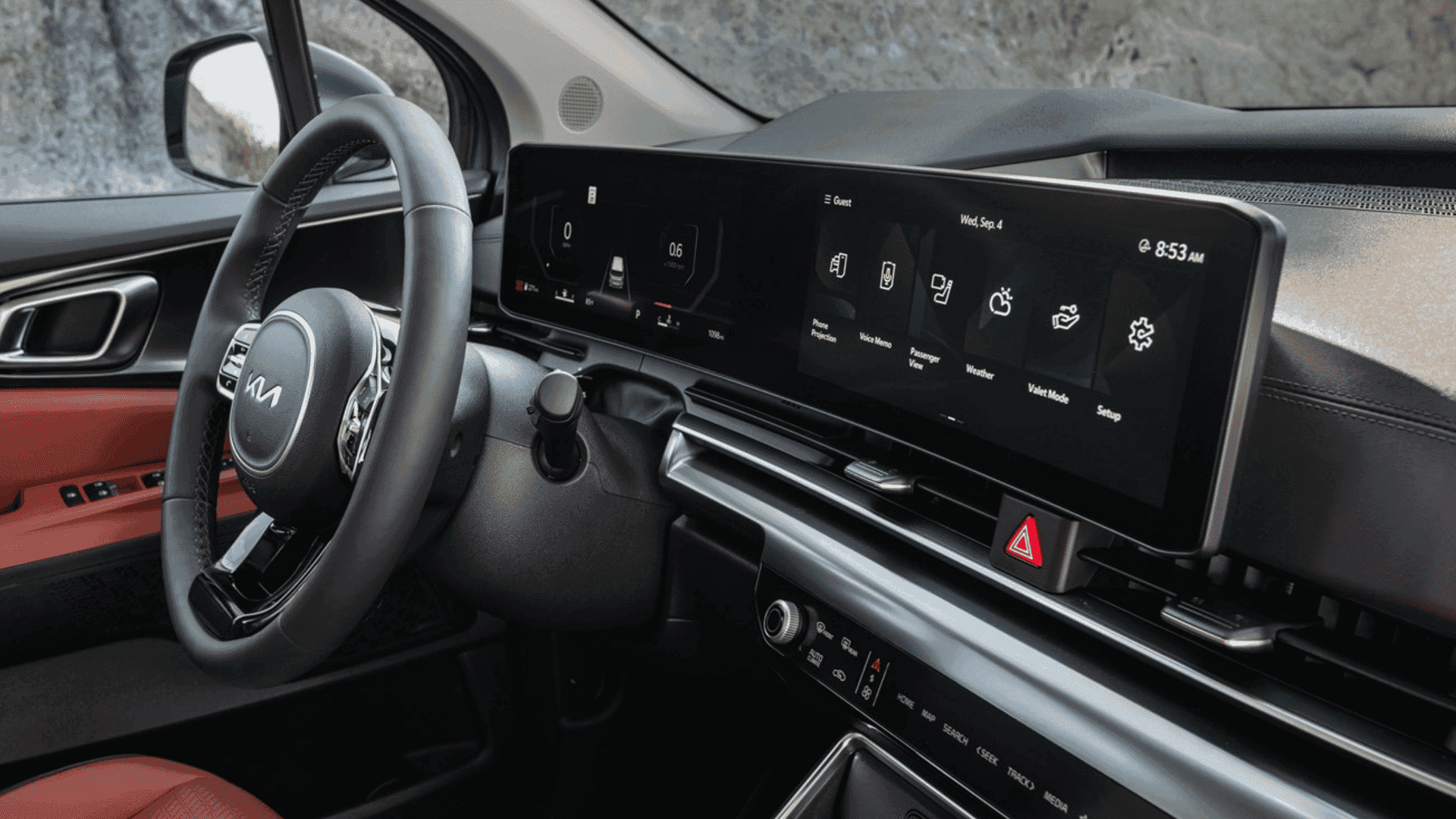
Power from the V6 engine is routed through an 8-speed automatic transmission that is standard across the entire model range. The transmission features a wide spread of gear ratios designed to balance low-speed torque delivery with efficient high-speed cruising. First gear is configured at a ratio of 4.808:1 to support initial acceleration and load movement, while eighth gear is set at 0.648:1 to reduce engine speed during steady highway operation.
Intermediate ratios are spaced to maintain consistent power delivery as vehicle speed increases. The final drive ratio is set at 3.510:1, supporting predictable throttle response and controlled acceleration. Reverse gear is configured at a ratio of 3.425:1, providing sufficient torque for maneuvering under load.
This drivetrain supports a maximum braked towing capacity of 3,500 pounds and an unbraked towing capacity of 1,000 pounds. These ratings apply uniformly across trims, reflecting a standardized structural and mechanical foundation. Fuel tank capacity is rated at 19.0 gallons, allowing for extended operating range between refueling intervals.
Structural Dimensions and Exterior Proportions
The 2026 Kia Carnival is built on a wheelbase measuring 121.7 inches, which supports interior space allocation and ride stability. Overall exterior length measures 203.0 inches, while width without mirrors is rated at 78.5 inches. When side mirrors are included, total width extends to 89.2 inches. These dimensions contribute to interior capacity while maintaining controlled exterior proportions.
Overall height without roof rails measures 68.5 inches on applicable trims. Models equipped with roof rails reach a height of 69.9 inches. Front and rear overhangs measure 36.8 inches and 44.5 inches, respectively. Minimum ground clearance is rated at 6.8 inches, supporting standard driving conditions without compromising underbody clearance.
Track width varies slightly by trim but remains consistent within a narrow range, with front and rear track measurements between 68.5 inches and 68.9 inches. Approach and departure angles are rated at 15.4 degrees and 20.0 degrees, respectively, reflecting a geometry optimized for everyday driving surfaces.
Interior Space Allocation and Passenger Measurements
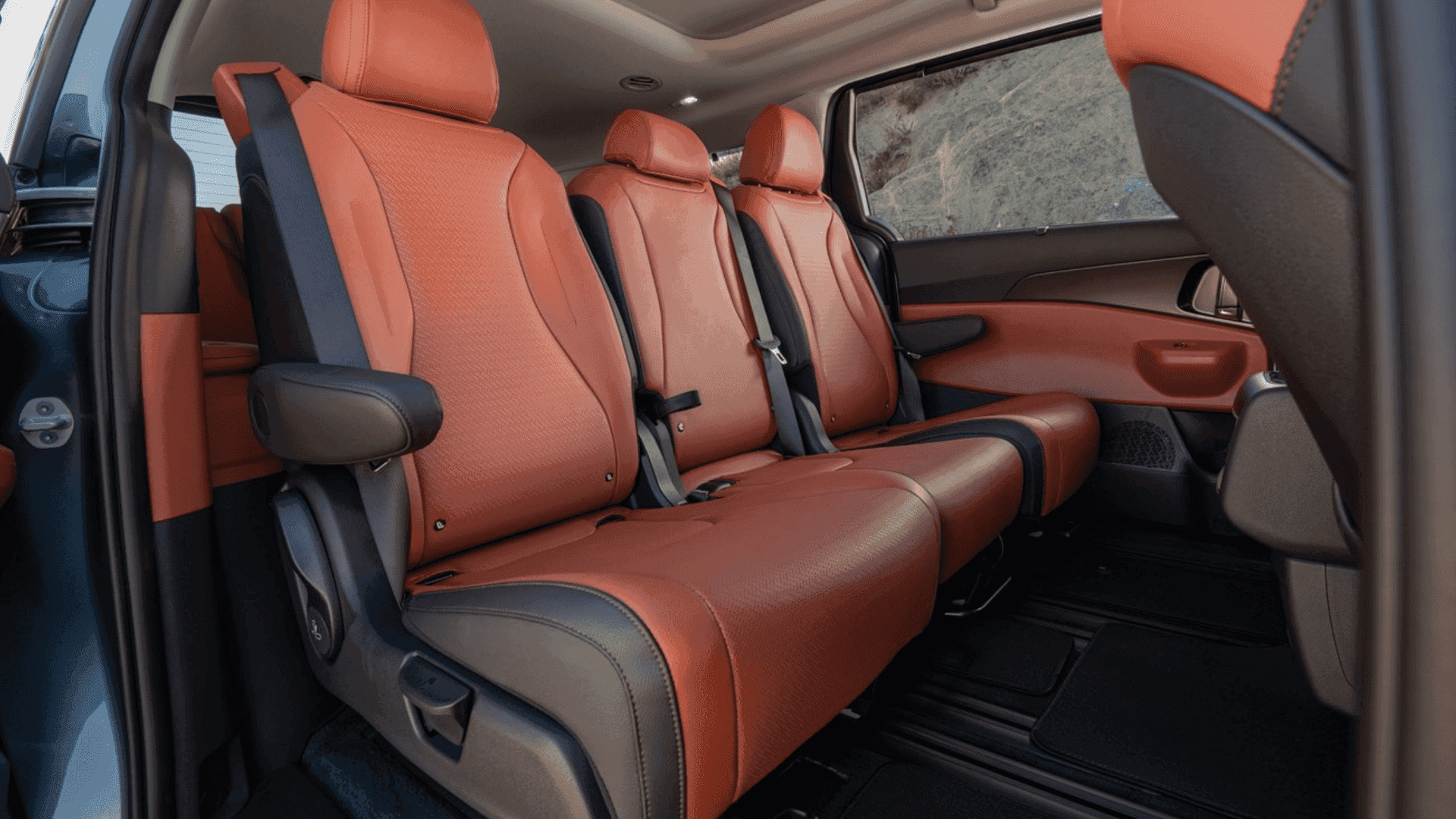
Interior dimensions of the 2026 Kia Carnival are engineered to maintain consistent space across all seating rows. Front-row headroom without a sunroof measures 40.9 inches, while second-row headroom measures 39.5 inches and third-row headroom measures 38.6 inches. Models equipped with a sunroof provide headroom measurements of 39.7 inches in the front row, 37.6 inches in the second row, and 36.5 inches in the third row.
Legroom is measured at 41.1 inches in the front row, 40.5 inches in the second row, and 35.6 inches in the third row. Shoulder room remains consistent across trims, measuring 64.2 inches in the front row, 63.2 inches in the second row, and 59.5 inches in the third row. Hip room is rated at 59.8 inches in the front row, 66.4 inches in the second row, and 50.4 inches in the third row.
These measurements reflect a standardized cabin layout designed to distribute space evenly across passenger positions without reliance on trim-specific structural changes.
Cargo Volume and Load Flexibility
Cargo capacity within the 2026 Kia Carnival is measured using SAE standards. Minimum cargo volume with all seating in place is rated at 40.2 cubic feet. Maximum cargo capacity expands to 145.1 cubic feet when seating is configured to allow full load space utilization. These figures remain consistent across all trims, indicating identical interior packaging and structural layout.
Roof rack load capacity is rated at 165 pounds, allowing additional cargo to be carried externally when required. Gross vehicle weight rating is set at 6,283 pounds, supporting a wide range of passenger and cargo combinations while maintaining compliance with structural and braking limits.
Suspension Geometry and Steering Systems
The front suspension of the 2026 Kia Carnival utilizes a MacPherson® strut configuration. The rear suspension employs a multi-link design. Both systems are paired with gas-type shock absorbers to maintain consistent damping characteristics. This suspension layout supports controlled wheel movement and predictable handling under varying load conditions.
Steering is managed through a column-mounted electric power steering system. The steering ratio is rated at 14.23:1, and total steering travel measures three turns lock-to-lock. This configuration provides consistent steering response and supports maneuverability in confined spaces while maintaining directional stability at higher speeds.
Braking Hardware and Control Components
Braking hardware includes ventilated disc brakes at the front and solid disc brakes at the rear. Both front and rear brake rotors measure 12.8 inches in diameter. An electronic parking brake is standard across all trims, replacing traditional mechanical systems.
The braking system uses a tandem master cylinder with a fixed seal design. Booster ratio is rated at 10.0:1, and the booster diameter measures 11.0 inches. This configuration supports controlled pedal response and consistent braking force distribution under various load conditions.
Wheels, Tires, and Rolling Specifications
Wheel and tire configurations vary by trim level but maintain consistent rolling diameter parameters. Base trims are equipped with 17-inch alloy wheels measuring 6.5J by 17 inches and fitted with P235/65R17 tires. Higher trims use 19-inch alloy wheels measuring 7.5J by 19 inches and fitted with P235/55R19 tires.
All trims include a temporary spare tire mounted on a steel wheel. The spare tire size is rated at T135/90D17, ensuring compatibility across configurations.
Electrical Architecture and Supporting Systems
The 2026 Kia Carnival uses a 12-volt maintenance-free battery system. Battery capacity varies depending on equipment configuration. Models without a power liftgate use an 80 amp-hour battery rated at 660 cold cranking amps. Models equipped with a power liftgate use a 90 amp-hour battery rated at 850 cold cranking amps.
Electrical generation is supported by a 13.5-volt alternator rated at 180 amps. Engine starting is handled by a 12-volt starter motor rated at 1.7 kilowatts. These components are standardized to support onboard electrical systems and accessory operation.
Integrated Fuel Efficiency Metrics
Estimated fuel economy ratings for the 2026 Kia Carnival equipped with the automatic transmission are rated at 18 miles per gallon in city driving conditions, 26 miles per gallon on the highway, and 21 miles per gallon combined. These figures reflect the balance between vehicle mass, engine output, and transmission calibration.
Disclaimer: Based on EPA estimates. Actual mileage will vary with options, driving conditions, driving habits, and your vehicle’s condition. For more information, please see www.fueleconomy.gov.
Visit Courage Kia for a Test Ride
Drivers interested in examining the engineering and specifications of the 2026 Kia Carnival are invited to schedule a test drive through Courage Kia near Columbia, SC. Experiencing the vehicle in motion allows direct evaluation of the V6 engine output, transmission behavior, steering response, and braking performance. The suspension configuration and interior space measurements can also be assessed during typical driving conditions. A scheduled drive provides the opportunity to review cargo flexibility, visibility, and overall system integration. Appointments can be arranged to allow sufficient time for a thorough technical evaluation of the vehicle’s capabilities.

