


2026 Kia EV4 near Columbia, SC
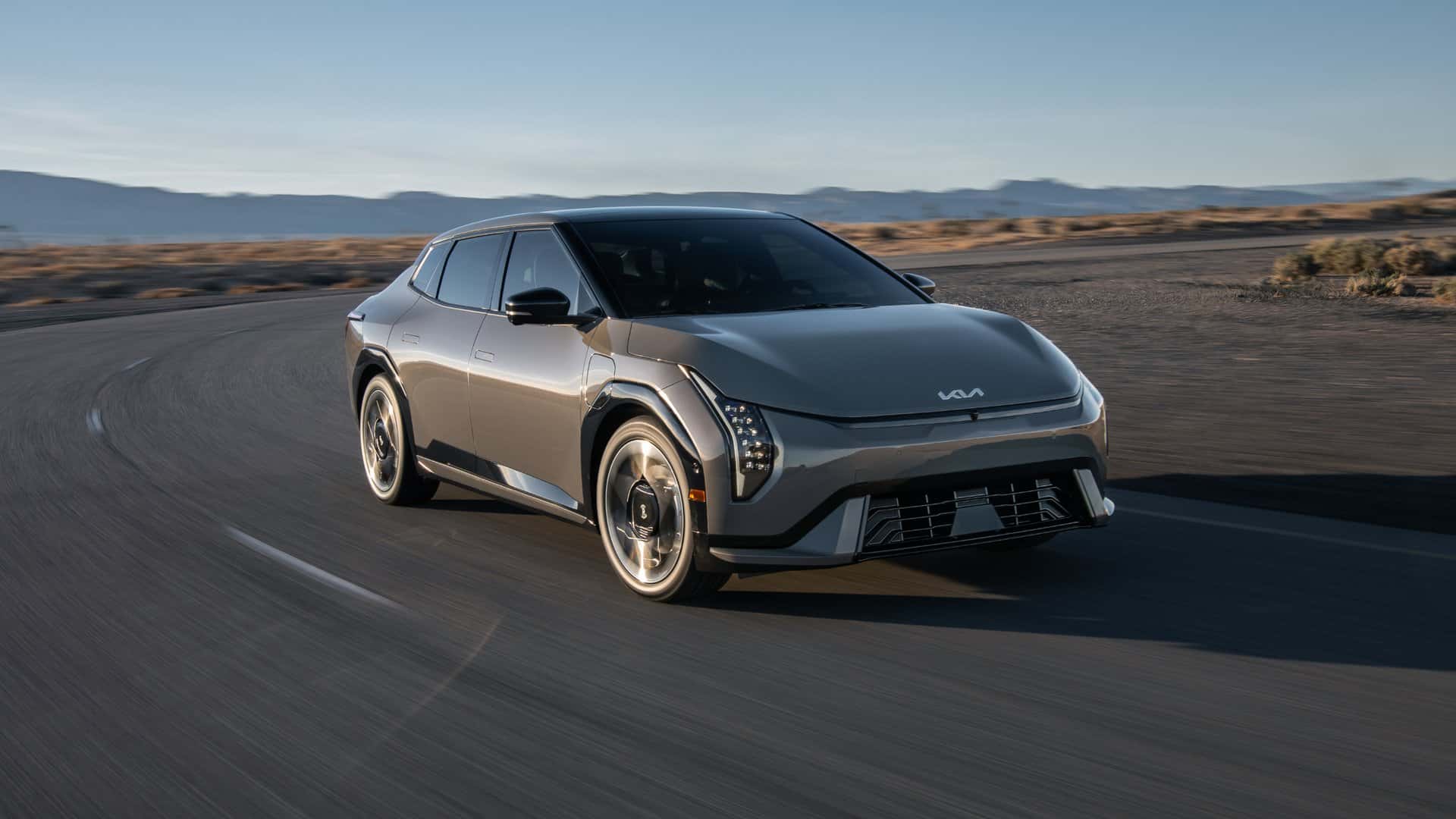
The 2026 Kia EV4 enters the U.S. market as the first global all-electric sedan from Kia, developed to expand the brand’s electric vehicle lineup beyond crossover and SUV body styles. Designed on a dedicated electric platform, the 2026 Kia EV4 emphasizes efficiency, structural rigidity, and advanced electronic integration. The model combines compact exterior proportions with a fully electric drivetrain engineered for daily usability, extended driving range, and modern connectivity. From its battery architecture to its driver assistance systems, the 2026 Kia EV4 reflects a methodical approach to electric sedan development focused on measurable performance characteristics and system-level integration.
Electric Global Modular Platform Engineering
The 2026 Kia EV4 is constructed on the brand’s 400V Electric Global Modular Platform, a vehicle architecture developed specifically for battery-electric applications. This platform enables optimized battery placement beneath the cabin floor, contributing to a low center of gravity and balanced weight distribution. The flat floor configuration enhances interior packaging efficiency while supporting structural rigidity across the body shell.
The platform is designed to accommodate multiple battery capacities without altering suspension geometry or drivetrain layout. This approach allows the 2026 Kia EV4 to offer different range configurations while maintaining consistent ride and handling characteristics across trim levels. Structural reinforcement in key load-bearing areas improves torsional stiffness, which supports predictable steering response and controlled body movement during cornering and braking.
Battery Systems and Electric Motor Output
The 2026 Kia EV4 is available with two lithium-ion battery options, each engineered to support front-wheel drive operation. The standard configuration uses a 58.3 kWh battery paired with a front-mounted electric motor rated at 150 kW. This setup is standard on the Light trim and provides a Kia-estimated driving range of 235 miles when fully charged.
An available 81.4 kWh long-range battery is offered on Wind and GT-Line™ trims. This larger battery maintains the same 150 kW motor output while extending the Kia-estimated driving range to 330 miles. Both battery systems are integrated into the platform structure to enhance thermal stability and support consistent power delivery. Battery management software regulates charging, discharge rates, and temperature control to support long-term durability and predictable performance.
Disclaimer: MPG: Based on EPA estimates. Actual mileage will vary with options, driving conditions, driving habits, and your vehicle’s condition. For more information, please see www.fueleconomy.gov.
Charging Infrastructure Compatibility and Performance
The 2026 Kia EV4 supports both AC and DC charging environments and is equipped with a North American Charging Standard port positioned on the front passenger side. This placement improves accessibility at public charging stations and simplifies alignment in compact charging spaces. When connected to a DC fast charger, the 2026 Kia EV4 can replenish the battery from 10 to 80 percent in approximately 29 minutes with the 58.3 kWh battery and about 31 minutes with the 81.4 kWh battery.
For home charging applications, the 2026 Kia EV4 supports Level 2 AC charging, allowing overnight replenishment under typical residential electrical conditions. The onboard charging system works in coordination with the battery thermal management system to regulate charging speeds based on environmental conditions and battery state. This integrated approach helps maintain stable charging performance across varying climates and usage patterns.
Aerodynamic Efficiency and Exterior Proportions
Aerodynamic efficiency plays a significant role in extending electric driving range, and the 2026 Kia EV4 incorporates multiple design elements intended to reduce drag. A full underbody cover smooths airflow beneath the vehicle, minimizing turbulence that can reduce efficiency at higher speeds. These measures contribute to a drag coefficient as low as 0.23.
The exterior silhouette combines a low front profile, a long rear section, and a fastback-style roofline. These proportions guide airflow smoothly along the body surface and reduce separation at the rear of the vehicle. The result is a sedan profile that balances aerodynamic performance with functional interior space and stable highway behavior.
Suspension Layout and Chassis Dynamics
The 2026 Kia EV4 employs an EV-specific suspension setup designed to balance comfort and handling precision. The front suspension uses a MacPherson® strut configuration tuned for electric vehicle weight distribution. At the rear, a multi-link suspension system provides improved wheel control during cornering and over uneven road surfaces.
Kia reinforced select areas of the vehicle body to improve rigidity and reduce flex during dynamic driving situations. The low-mounted battery pack contributes to a lower center of gravity, which enhances stability during lane changes and cornering. Steering calibration prioritizes linear response and predictable feedback, supporting controlled operation in both urban and highway driving conditions.
Regenerative Braking and i-Pedal 3.0 Operation
The 2026 Kia EV4 features the brand’s i-Pedal 3.0 system, an advanced regenerative braking technology designed to increase energy recovery during deceleration. This system allows the driver to control acceleration and deceleration using the accelerator pedal alone, enabling the vehicle to come to a complete stop without applying the brake pedal.
The i-Pedal 3.0 system operates in coordination with Smart Regenerative Braking, which automatically adjusts regeneration levels based on traffic flow and road conditions. The system is capable of functioning in reverse and includes a memory feature that restores the previously selected regeneration level when the vehicle restarts. These functions support consistent vehicle behavior and improved energy efficiency during daily driving.
Vehicle-to-Load Energy Distribution Capability
The 2026 Kia EV4 offers available Vehicle-to-Load functionality, enabling the vehicle to supply electrical power to compatible external devices. This system allows energy stored in the high-voltage battery to be used for operating items such as laptops, lighting equipment, and small electronics. Power output is regulated by the vehicle’s energy management system to maintain stable voltage delivery.
Vehicle-to-load operation is designed to function until the battery reaches a predetermined state of charge, preserving sufficient energy for vehicle operation. This feature expands the functional scope of the 2026 Kia EV4 beyond transportation while maintaining system-level safeguards.
Exterior Design Identity and Trim Differentiation
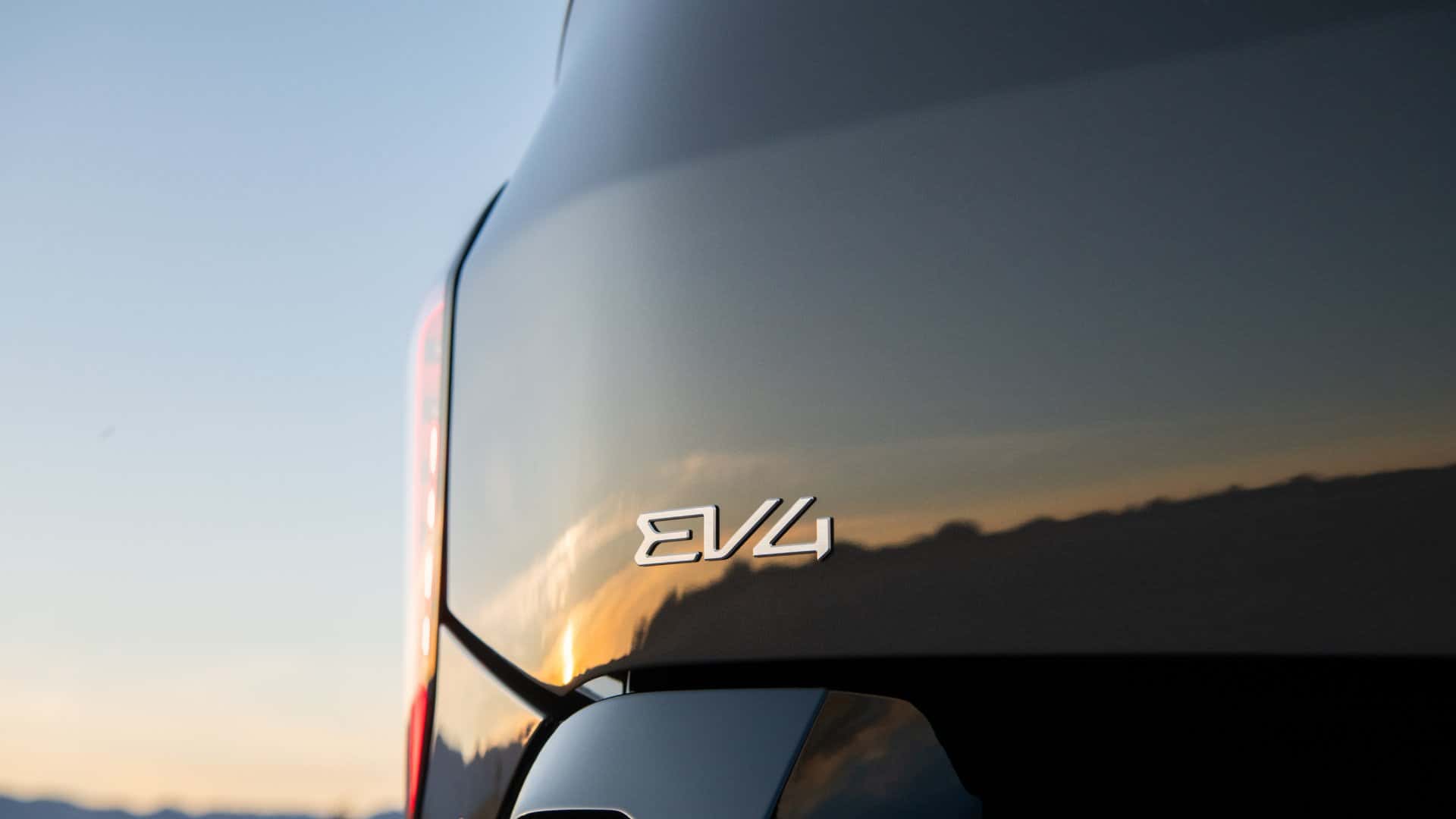
The 2026 Kia EV4 exterior follows the brand’s Opposites United design philosophy, combining geometric elements with functional surfaces. Vertical headlamps and Star Map lighting define the front fascia and establish visual continuity with other electric models in the brand lineup. Available small cube LED headlights with Dynamic Welcome Lights enhance visibility and provide a controlled illumination sequence when approaching the vehicle.
Rear styling includes vertical taillights and a two-piece roof spoiler that reinforce vehicle width and manage airflow. Wheel options vary by trim, with 17-inch aero wheels standard on Light and Wind models and 19-inch spoke-type wheels exclusive to the GT-Line™. GT-Line™ models also feature distinct exterior elements that differentiate appearance without altering drivetrain specifications.
Interior Architecture and Spatial Optimization
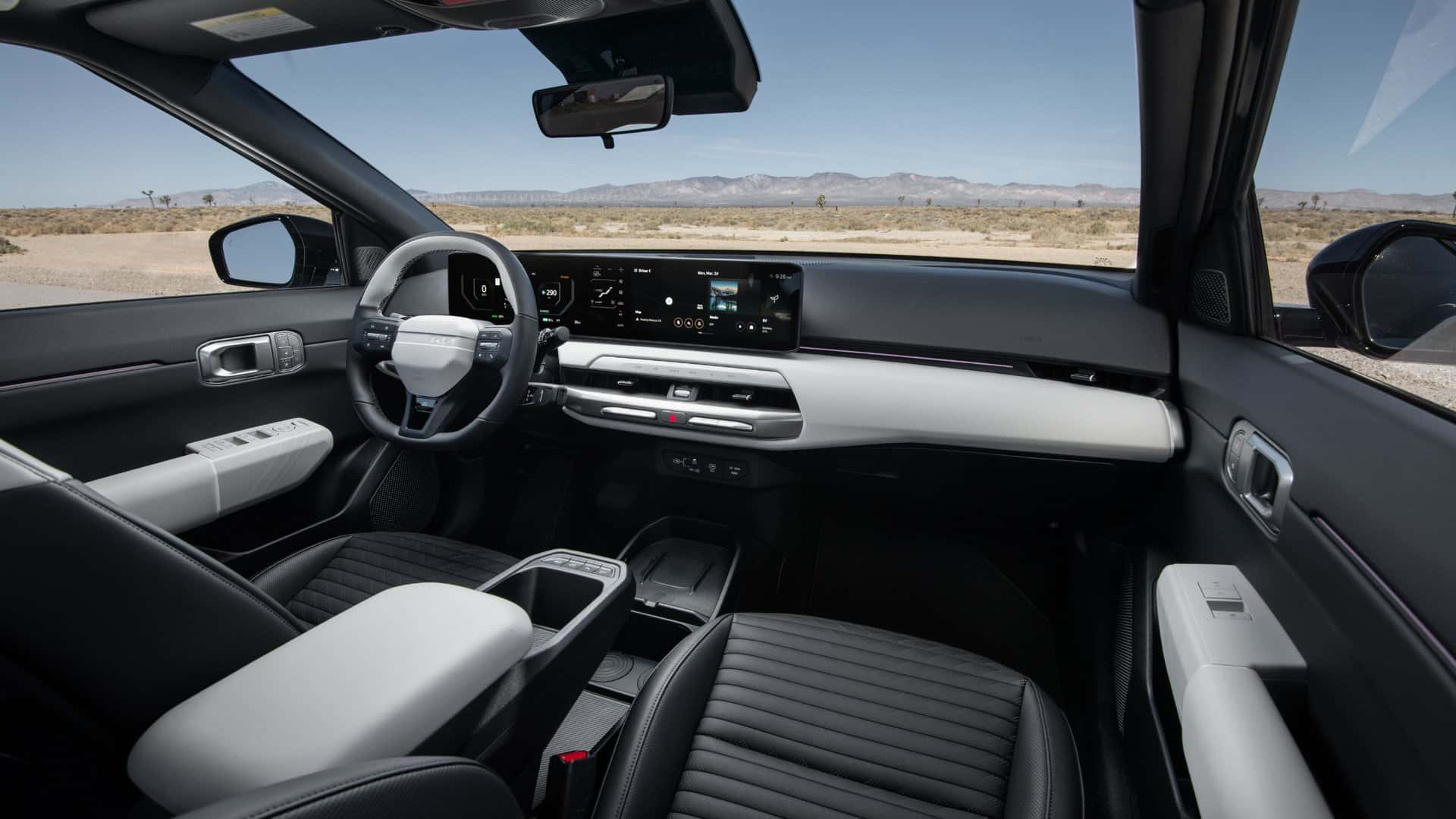
The 2026 Kia EV4 cabin is designed around a flat floor layout enabled by the electric platform. This configuration improves passenger foot room and contributes to a more open interior environment. The dashboard features a free-floating interface and a two-spoke steering wheel, emphasizing visibility and control accessibility.
Material selection prioritizes durability and tactile consistency, while cabin layout focuses on functional storage and ease of use. Available 64-color dynamic ambient lighting allows adjustable interior illumination without affecting primary control visibility. Seating and interior dimensions are configured to support both daily commuting and extended travel.
Integrated Displays and Infotainment Systems
The 2026 Kia EV4 incorporates a nearly 30-inch combined widescreen display arrangement across the dashboard. This system includes dual 12.3-inch screens for the instrument cluster and infotainment functions, along with a five-inch climate control display. Together, these components form Kia’s connected car Navigation Cockpit interface.
The infotainment system supports over-the-air software updates, allowing functional improvements and interface refinements without physical service visits. Wireless Apple CarPlay® and Android Auto™ compatibility provide smartphone integration without the need for cables. Display customization options allow drivers to adjust visual themes across the cockpit.
Connectivity Features and AI-Based Interaction
Available Digital Key 2.0 allows compatible smartphones to function as vehicle keys, supporting remote access functions such as locking, unlocking, and climate activation. This system integrates with the vehicle’s security architecture to manage access permissions and user authentication.
The 2026 Kia EV4 also includes an AI-based voice assistant designed to improve voice recognition accuracy through machine learning. The system supports natural language commands for vehicle functions, navigation input, and media control. Additional comfort features include dual-zone automatic climate control with rear air vents, an acoustic windshield to reduce external noise intrusion, and available heated and ventilated front seats with driver memory functionality.
Advanced Driver Assistance and Monitoring Systems
The 2026 Kia EV4 is equipped with a comprehensive suite of Advanced Driver Assistance Systems designed to support driver awareness and vehicle control. Standard Highway Driving Assist uses navigation data and sensor input to maintain speed and following distance on controlled-access highways. The system also supports lane positioning assistance under qualifying conditions.
Available driver assistance features include Forward Collision Avoidance Assist, Lane Following Assist, Intelligent Speed Limit Assist, Driver Attention Warning, and Remote Smart Parking Assist. Hands-On Detection monitors steering wheel contact to confirm driver engagement and regulate system alerts. These technologies operate in coordination to support consistent situational awareness.
Visit Courage Kia for a Test Ride
Drivers interested in evaluating the technical performance and system integration of the 2026 Kia EV4 can arrange a driving experience through Courage Kia near Columbia, SC. A scheduled drive provides an opportunity to assess electric motor response, regenerative braking behavior, and driver assistance operation in typical road conditions. Experiencing the 2026 Kia EV4 firsthand allows a clearer understanding of how the battery configurations, chassis tuning, and digital interfaces function together. This approach supports informed evaluation based on direct interaction with the vehicle’s engineering features.

