


2026 Kia Seltos near Rock Hill, SC
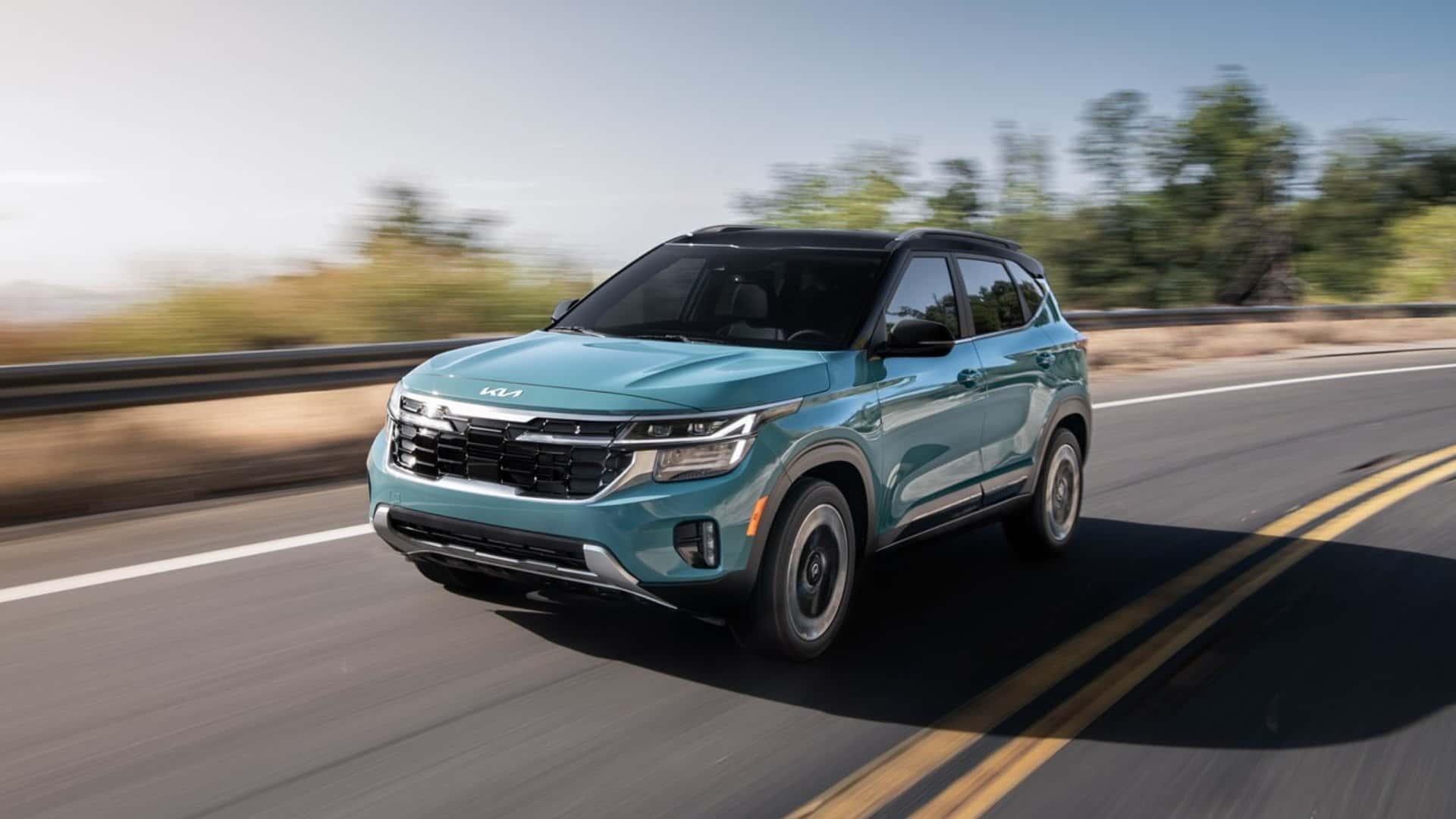
The 2026 Kia Seltos is engineered as a compact SUV with consistent structural design and multiple powertrain configurations across four trims: LX, S, EX, and SX. Each trim shares core dimensional architecture, chassis construction, and baseline mechanical systems while offering variation in engine output, drivetrain configuration, and transmission type. The vehicle uses aluminum engine blocks and heads across all trims, paired with steel oil pans and standardized cooling and lubrication systems. Fuel delivery systems vary between Multi-Point Injection and Gasoline Direct Injection depending on engine selection. The model maintains a uniform fuel tank capacity of 13.2 gallons and requires unleaded gasoline rated at RON 91 or higher. This consistent engineering approach ensures predictable performance characteristics across the lineup.
Engine Configurations and Output Characteristics
The standard engine for the LX, S, and EX trims is a 2.0-liter Multi-Point Injection Atkinson-cycle engine with a displacement of 1,999 cubic centimeters. It uses a bore and stroke of 81.0 mm by 97.0 mm and operates at a compression ratio of 12.5:1. This engine produces 147 horsepower at 6,200 rpm and 132 lb-ft of torque at 4,500 rpm. The valve system consists of a 16-valve configuration with hydraulic lash adjustment, which supports consistent valve timing and reduced maintenance requirements.
The SX trim features a 1.6-liter turbocharged Gasoline Direct Injection engine with a displacement of 1,598 cubic centimeters. Its bore and stroke measure 75.6 mm by 89.0 mm, and it operates at a compression ratio of 10.0:1. This engine produces 190 horsepower at 6,000 rpm and 195 lb-ft of torque available between 1,700 and 4,500 rpm. The broader torque range improves acceleration consistency across varying speeds. The turbocharged engine uses a 16-valve swing-arm-type valve system, which supports efficient airflow and combustion under boosted conditions.
Both engines incorporate water pump cooling systems and oil pump lubrication systems. Engine oil capacity is rated at 5.0 liters at the plant and 4.8 liters during after-service conditions. Emission control systems are consistent across all trims and include WCC and UCC components.
Transmission Systems and Gear Ratios
Transmission systems differ based on engine selection. The 2.0-liter engine pairs with an Intelligent Variable Transmission. This CVT system maintains a continuous gear ratio range from 2.680:1 to 0.385:1 across simulated gear positions. Reverse gear ratios range from 2.822:1 to 1.822:1, and the final gear ratio is set at 6.052:1. The system is designed to maintain engine efficiency by adjusting ratios without fixed gear steps.
The turbocharged 1.6-liter engine pairs with an 8-speed automatic transmission. This transmission includes defined gear ratios, starting at 4.717:1 in first gear and progressing to 0.635:1 in eighth gear. Reverse gear ratio is 3.239:1, and the final gear ratio is 3.510:1. The stepped gear design supports controlled acceleration and consistent power delivery across different driving conditions.
Lubricant oil capacity for the CVT system ranges from 6.7 liters in front-wheel drive configurations to 6.9 liters in all-wheel drive configurations. The 8-speed automatic transmission uses 6.5 liters of lubricant oil.
Drivetrain Layout and Performance Metrics
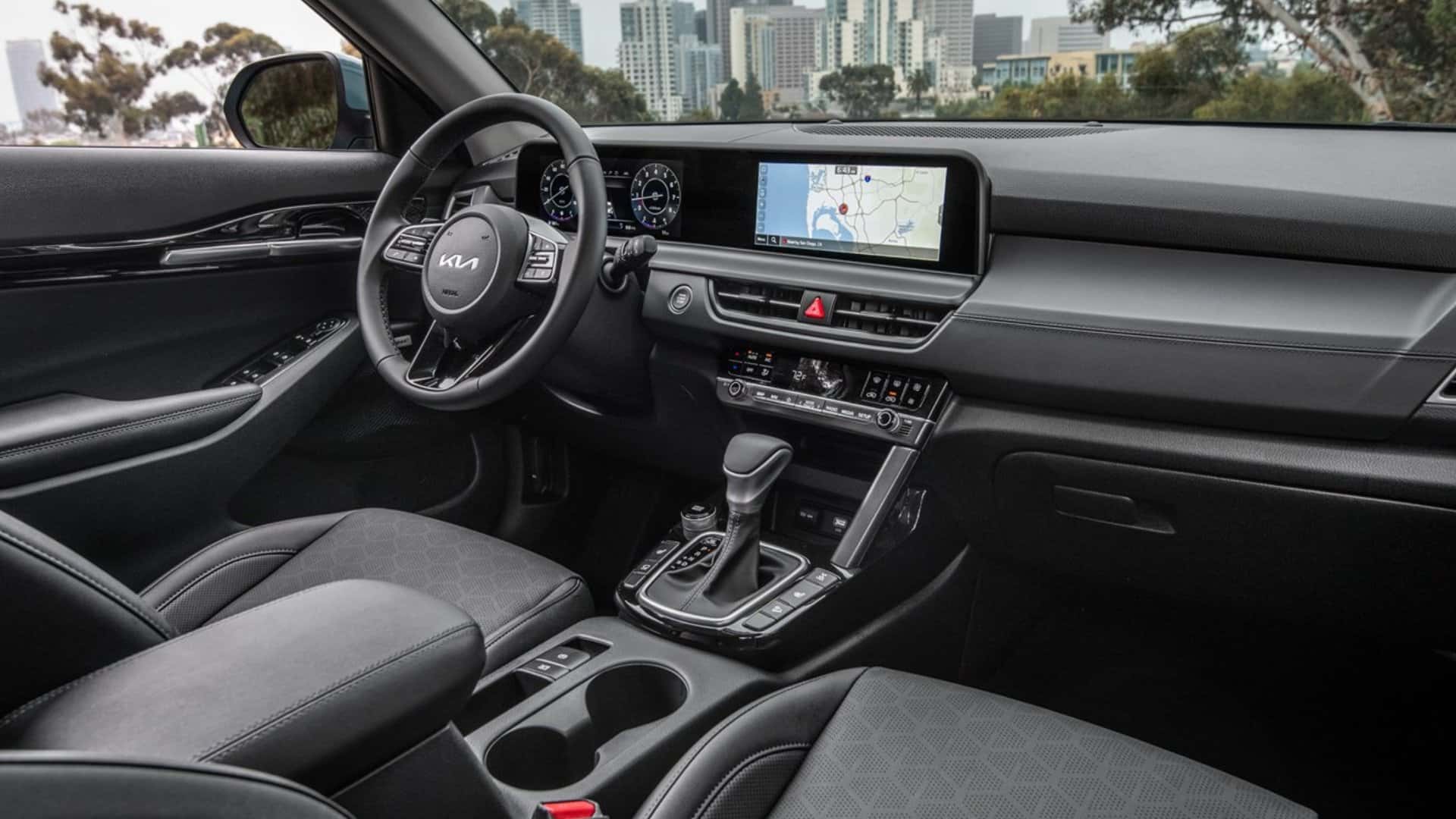
The 2026 Kia Seltos is available in both front-wheel drive and all-wheel drive configurations. Front-wheel drive is standard across all trims, while all-wheel drive is available as an option. All-wheel drive systems incorporate a multilink rear suspension setup, which improves traction and stability compared to the torsion beam axle used in front-wheel drive models.
Acceleration performance varies depending on drivetrain and engine configuration. Front-wheel drive models equipped with the 2.0-liter engine achieve 0 to 100 kilometers per hour in 9.3 seconds. All-wheel drive models with the same engine complete this acceleration in 10.1 seconds. Mid-range acceleration from 60 to 100 kilometers per hour is measured at 4.8 seconds for front-wheel drive and 5.4 seconds for all-wheel drive. Acceleration from 80 to 120 kilometers per hour is recorded at 6.5 seconds for front-wheel drive and 7.1 seconds for all-wheel drive.
The turbocharged all-wheel drive configuration achieves 0 to 100 kilometers per hour in 8.4 seconds. Mid-range acceleration from 60 to 100 kilometers per hour is 4.5 seconds, and acceleration from 80 to 120 kilometers per hour is 5.7 seconds. Maximum speed is rated at 190 kilometers per hour for standard models and 210 kilometers per hour for the turbocharged variant.
Suspension Systems and Steering Mechanics
The front suspension across all trims uses a MacPherson® strut configuration. Rear suspension varies by drivetrain. Front-wheel drive models use a coupled torsion beam axle, while all-wheel drive models use a multilink rear suspension system. This distinction affects ride quality and handling characteristics, particularly on uneven surfaces.
Shock absorber configurations include advanced valve systems for front-wheel drive models and conventional valve systems for all-wheel drive models. These systems are designed to balance damping performance with ride stability.
Steering is controlled through a motor-driven power steering system using a rack-and-pinion design. The steering ratio is 12.8:1 across all trims, and the system provides 2.5 turns from lock to lock. The minimum turning circle radius is 5.3 meters, which supports maneuverability in confined environments.
Braking System Specifications
The braking system consists of ventilated disc brakes at the front and solid disc brakes at the rear. Front-wheel drive models use 11-inch front discs and 10-inch rear discs. All-wheel drive models use larger brake components, including 12-inch front discs and 11-inch rear discs.
The brake booster system includes a single 10.5-inch booster with a ratio of 10.0:1. Booster diameter is 11.1 inches, and thickness is 3.5 inches. The system achieves a stopping distance of approximately 13 feet from 60 miles per hour. These specifications indicate consistent braking performance across all configurations.
Exterior Dimensions and Structural Measurements
The 2026 Kia Seltos maintains consistent exterior dimensions across all trims. The wheelbase measures 103.5 inches, supporting stability and interior space distribution. Overall length is 172.6 inches, width is 70.9 inches, and height ranges from 63.6 inches without roof rails to 64.2 inches with roof rails.
Front and rear tread measurements vary slightly depending on drivetrain. Front-wheel-drive models have a front tread of 61.6 inches and a rear tread of up to 62.0 inches. All-wheel drive models measure 61.5 inches at the front and 61.9 inches at the rear, with the SX trim slightly adjusted to 61.3 inches in the front and 61.8 inches in the rear.
Ground clearance is 7.3 inches across all trims. Approach angle is 28.0 degrees, and the departure angle is 26.8 degrees. Overhang measurements are 34.0 inches at the front and 35.0 inches at the rear.
Interior Dimensions and Cargo Capacity
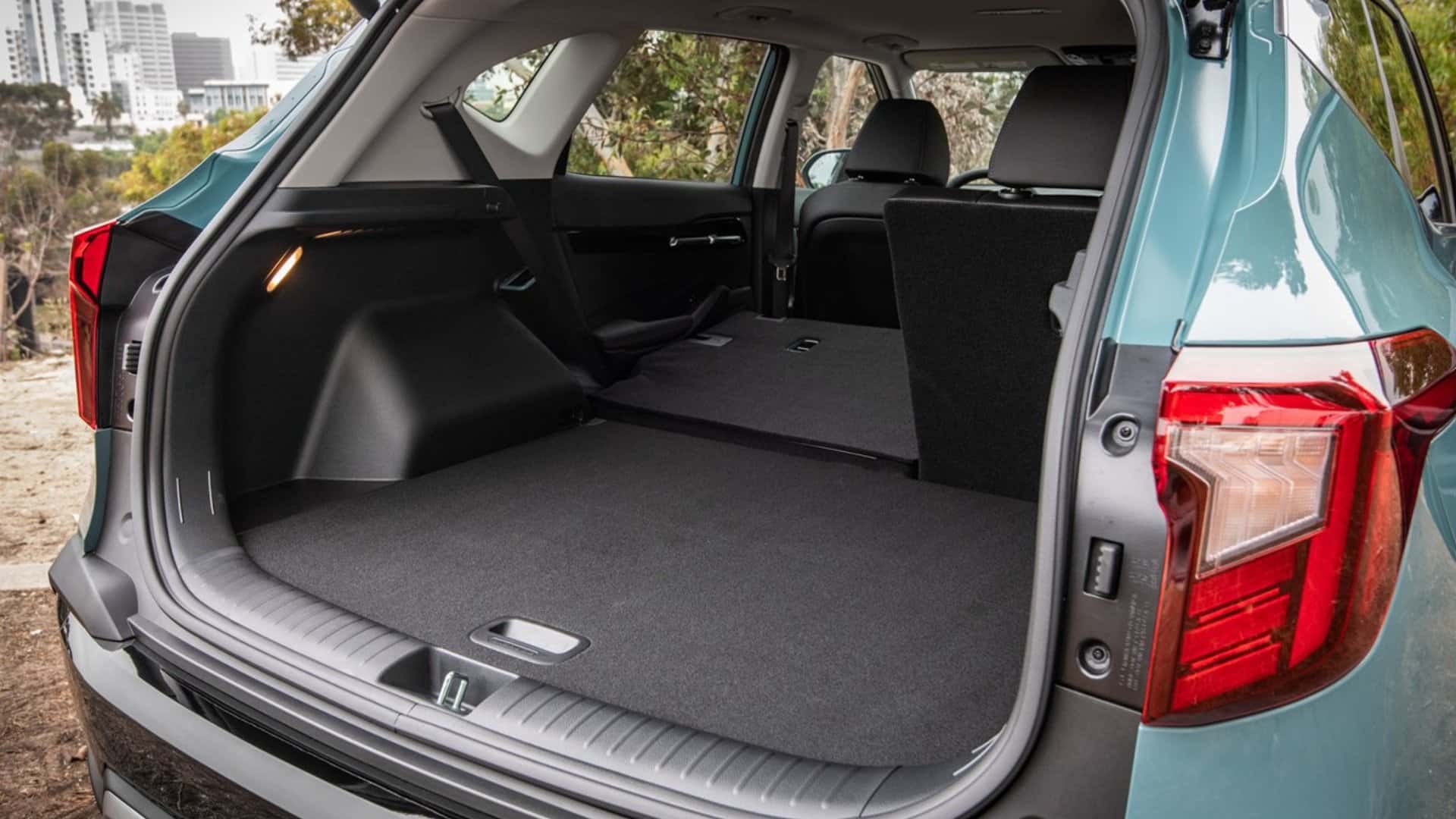
Interior space is consistent across all trims. Front headroom measures 40.0 inches, while rear headroom measures 38.4 inches. Models equipped with a sunroof provide slightly reduced front headroom at 38.5 inches. Legroom is 41.4 inches in the front and 38.0 inches in the rear.
Shoulder room measures 55.5 inches in the front and 54.9 inches in the rear. Hip room is 53.0 inches in the front and 48.8 inches in the rear. Passenger space is rated at 53.2 cubic feet for the front row and 46.4 cubic feet for the rear row.
Cargo capacity behind the second row is 26.6 cubic feet using the dual-level cargo floor in the low position. With the rear seats folded, cargo capacity increases to 62.8 cubic feet. This configuration supports flexible storage without altering the vehicle’s external dimensions.
Wheels, Tires, and Weight Distribution
Wheel and tire specifications vary based on drivetrain and trim. Front-wheel drive models use 17-inch alloy wheels with dimensions of 7.0J by 17 inches and are fitted with P215/55R17 tires. All-wheel drive SX models use 18-inch alloy wheels with dimensions of 7.5J by 18 inches and are equipped with P235/45R18 tires.
All trims include a temporary spare tire with a size of T125/80D16. Curb weight ranges from 2,937 pounds for front-wheel drive models to 3,248 pounds for all-wheel drive turbocharged models. Maximum curb weight reaches up to 3,363 pounds, depending on configuration.
Gross vehicle weight rating is 3,969 pounds for front-wheel drive models and up to 4,256 pounds for all-wheel drive configurations. Roof load capacity is rated at 221 pounds.
Fuel Economy Ratings and Efficiency Metrics
Fuel economy varies depending on drivetrain and engine type. Front-wheel drive models equipped with the 2.0-liter engine achieve 28 miles per gallon in city driving, 34 miles per gallon on the highway, and 31 miles per gallon combined. All-wheel drive models with the same engine achieve 27 miles per gallon in the city, 31 miles per gallon on the highway, and 29 miles per gallon combined.
The turbocharged all-wheel drive configuration achieves 24 miles per gallon in city driving, 27 miles per gallon on the highway, and 25 miles per gallon combined. These figures reflect the increased power output and drivetrain complexity.
Disclaimer: *Based on EPA estimates. Actual mileage will vary with options, driving conditions, driving habits, and your vehicle’s condition. For more information, please see www.fueleconomy.gov.
Available Functional Packages and Integrated Features
The EX Sunroof Package includes a power sunroof and 17-inch gloss black alloy wheels. This package modifies exterior appearance while maintaining standard mechanical systems. The SX Sunroof Package includes a digital key system, a power sunroof, and ventilated front seats. These features are integrated without altering engine or drivetrain specifications.
Visit Courage Kia to Schedule a Test Ride
At Courage Kia near Rock Hill, SC, the 2026 Kia Seltos is available for detailed evaluation of its mechanical systems and performance specifications. A test drive provides the opportunity to assess engine output, transmission behavior, and drivetrain response under controlled conditions. The available configurations allow comparison between the 2.0-liter engine and the turbocharged 1.6-liter option. The vehicle’s steering ratio, suspension setup, and braking system can be observed directly during operation. Scheduling a test drive allows a complete review of the specifications outlined across each trim level.

