


2026 Kia Sorento near Columbia, SC
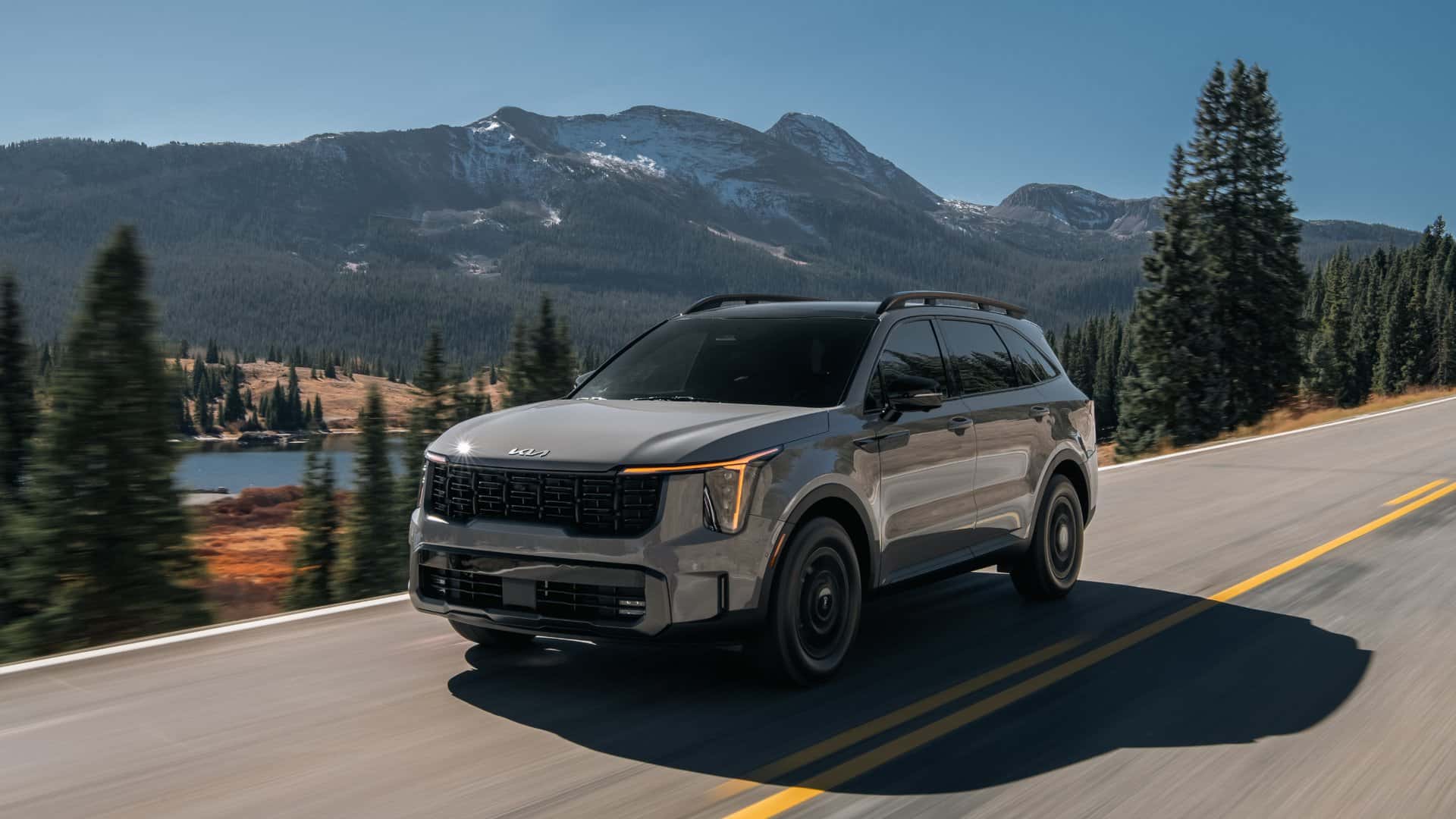
The 2026 Kia Sorento is engineered as a midsize SUV that prioritizes mechanical versatility, dimensional efficiency, and drivetrain adaptability. Designed to accommodate a wide range of driving conditions and operational demands, the 2026 Kia Sorento offers multiple powertrain configurations, transmission systems, and drivetrain layouts. Each configuration is built around a standardized platform that maintains consistent structural dimensions while allowing variation in performance output and load capability. The result is a vehicle that supports both everyday commuting and higher-demand applications such as towing, extended passenger transport, and variable surface driving.
The 2026 Kia Sorento lineup is unified by a consistent wheelbase, suspension architecture, and braking system, ensuring predictable handling characteristics across trims. Variations in engine output, transmission type, and drivetrain selection allow buyers to prioritize efficiency, acceleration performance, or traction control based on intended usage. The following sections outline the technical composition of the 2026 Kia Sorento in detail, focusing strictly on its mechanical systems, structural measurements, and performance metrics.
Powertrain Configurations and Engine Specifications
All 2026 Kia Sorento trims are powered by a 2.5-liter four-cylinder engine platform with gasoline direct injection supplemented by multi-point injection. This dual-injection strategy improves fuel atomization under varying load conditions while supporting stable combustion across a wide operating range. Engine displacement is consistent at 2,497 cubic centimeters across all trims, with a bore and stroke measurement of 88.5 millimeters by 101.5 millimeters.
The naturally aspirated 2.5-liter engine is installed on LX and S trims. This configuration operates with a compression ratio of 13.0 to 1 and produces a maximum output of 191 horsepower at 6,100 revolutions per minute. Peak torque is rated at 195.2 pound-feet. This engine is designed for linear throttle response and sustained efficiency during steady-state driving.
Higher trims, including EX, SX, and SX Prestige, are equipped with a turbocharged version of the same 2.5-liter engine. The turbocharged configuration operates at a reduced compression ratio of 10.5 to 1 to support forced induction. Maximum output increases to 281 horsepower at 5,800 revolutions per minute, while torque output rises substantially to 311.6 pound-feet. This increase in torque occurs at lower engine speeds compared to the naturally aspirated engine, supporting stronger acceleration and improved load handling.
All engine variants use a double overhead camshaft design with four valves per cylinder and hydraulic lash adjusters. Ignition is handled by a distributorless system utilizing plug-top coil architecture. Lubrication capacity is rated at 6.8 liters, while cooling capacity ranges between 3.3 and 3.8 liters depending on engine configuration.
Transmission Design and Drivetrain Layouts
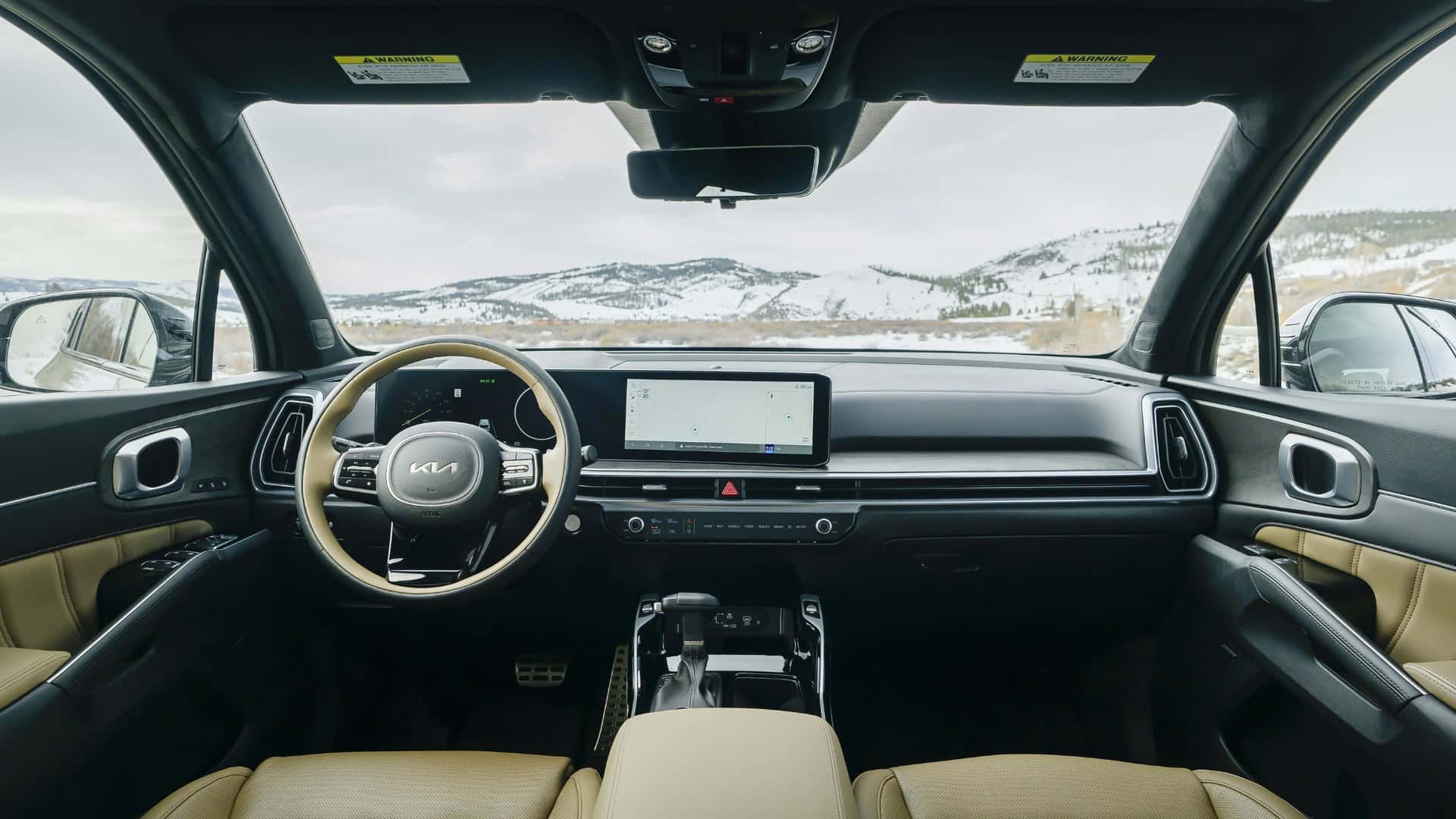
Transmission selection is dependent on engine configuration. Naturally aspirated models are paired with an 8-speed automatic transmission using a torque converter. This transmission features closely spaced gear ratios that allow gradual progression through the power band. First gear is rated at 4.487 to 1, while eighth gear is rated at 0.635 to 1, supporting reduced engine speed during highway operation. Reverse gear is rated at 3.081 to 1. Final drive ratios vary based on drivetrain, with front-wheel-drive models using a 3.798 to 1 ratio and all-wheel-drive models using a 4.081 to 1 ratio.
Turbocharged models utilize an 8-speed dual-clutch transmission with a wet friction clutch system. This transmission is designed to handle higher torque output while enabling faster shift response. Gear ratios are configured to optimize both low-speed acceleration and sustained high-speed operation. Distinct final drive ratios are used for first and second gear stages to manage torque distribution under load.
Front-wheel drive is standard across the range, with active on-demand all-wheel drive available on most trims. The all-wheel-drive system automatically adjusts torque delivery between axles based on traction conditions, supporting stability on low-grip surfaces.
Performance Metrics and Dynamic Capabilities
Acceleration performance varies by engine and drivetrain configuration. Front-wheel-drive models equipped with the naturally aspirated engine achieve a zero to 100 kilometer per hour time of 9.8 seconds. All-wheel-drive versions complete the same benchmark in 10.3 seconds. Turbocharged front-wheel-drive models reduce this time to 7.4 seconds, while turbocharged all-wheel-drive models record 7.5 seconds.
Passing performance from 80 to 120 kilometers per hour further illustrates the output difference between engine types. Naturally aspirated models complete this range in approximately 6.7 seconds for front-wheel drive and 7.0 seconds for all-wheel drive. Turbocharged configurations complete the same range in approximately 4.4 seconds for front-wheel drive and 4.6 seconds for all-wheel drive.
Maximum speed ratings reach up to 210 kilometers per hour on turbocharged models. Braking performance remains consistent across all trims, with a recorded stopping distance of 132 feet from 60 miles per hour.
Exterior Dimensions and Ground Geometry
The 2026 Kia Sorento is built on a wheelbase measuring 110.8 inches. Overall length is rated at 189.6 inches, with a width of 74.8 inches and a standard height of 66.7 inches. Models equipped with roof rails measure 66.9 inches in height. Front and rear overhangs measure 36.4 inches and 42.3 inches, respectively.
Ground clearance is rated at 6.9 inches for both front-wheel-drive and all-wheel-drive configurations. Approach angle is measured at 16.8 degrees, while the departure angle is rated at 22.1 degrees. Ramp breakover angle is measured at 17.0 degrees, reflecting underbody clearance designed for light off-road and uneven surface conditions.
Interior Space Distribution and Seating Capacity
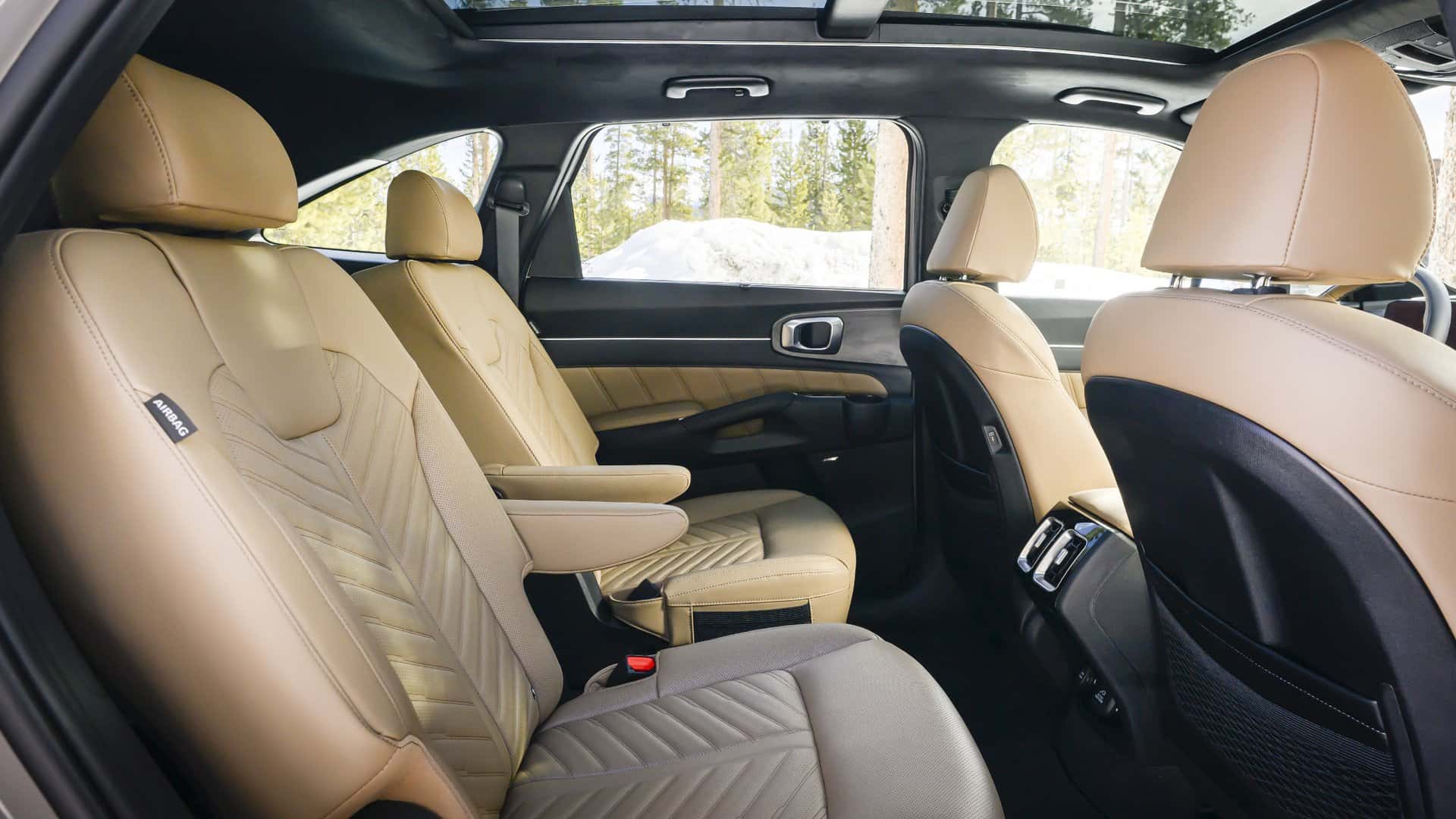
Interior space allocation supports both six-passenger and seven-passenger seating configurations. LX and S trims offer seating for seven occupants, while higher trims equipped with second-row captain’s chairs reduce seating capacity to six. Front-row headroom measures 40.3 inches, with second-row headroom at 39.1 inches and third-row headroom at 36.8 inches.
Legroom measurements include 41.4 inches in the front row, 41.7 inches in the second row, and 29.6 inches in the third row. Shoulder room measures 59.1 inches in the front, 58.1 inches in the second row, and 53.0 inches in the third row. Hip room is measured at 55.6 inches in the front, 55.1 inches in the second row, and 42.5 inches in the third row.
Cargo Volume and Load Management
Cargo capacity is measured using both SAE and VDA standards. Behind the first row, maximum cargo volume reaches 75.5 cubic feet under SAE measurement and up to 72.1 cubic feet under VDA measurement depending on trim. Cargo volume behind the second row ranges from 38.5 to 45.0 cubic feet under SAE measurement and from 21.5 to 28.7 cubic feet under VDA measurement. With the third row in use, cargo volume is rated at 12.6 cubic feet under SAE measurement and 6.3 cubic feet under VDA measurement.
These figures reflect a cargo area designed to maintain structural integrity while allowing flexible load configurations for varying passenger and storage needs.
Suspension Architecture and Steering Calibration
All 2026 Kia Sorento trims utilize a MacPherson® strut front suspension paired with a multi-link rear suspension. This configuration balances ride comfort with lateral stability. Steering is handled by a column-mounted motor-driven power steering system with a steering ratio of 13.72 to 1. Steering wheel rotation measures 2.62 turns lock to lock.
The turning radius is rated at 18.96 feet curb to curb, supporting maneuverability in confined environments.
Braking Systems, Wheels, and Tires
Braking hardware consists of ventilated disc brakes at both the front and rear. Front rotors measure 12.8 inches in diameter, while rear rotors measure 12.0 inches. Brake booster size is rated at 11.6 inches, paired with a master cylinder measuring 0.88 inches.
Wheel sizes range from 17-inch alloy wheels on base trims to 20-inch alloy wheels on upper trims. Tire sizes scale accordingly, ranging from 235 section width tires on smaller wheels to 255 section width tires on 20-inch configurations. All trims include a temporary spare tire.
Weight Ratings and Towing Capability
Curb weight varies by trim and drivetrain. Front-wheel-drive models range from approximately 3,814 pounds to 4,074 pounds. All-wheel-drive models range from approximately 4,045 pounds to 4,250 pounds. Gross vehicle weight ratings range between 5,401 pounds and 5,512 pounds depending on configuration.
Standard braked towing capacity is rated at 2,000 pounds for both front-wheel-drive and all-wheel-drive models. Turbocharged models equipped with a towing package increase this capacity to 3,500 pounds. Unbraked towing capacity is rated at 1,650 pounds.
Fuel Efficiency Ratings and Operating Balance
Fuel economy estimates reflect differences in engine output and drivetrain selection. Naturally aspirated front-wheel-drive models achieve an estimated combined rating of 26 miles per gallon, while all-wheel-drive variants achieve 25 miles per gallon combined. Turbocharged models achieve an estimated combined rating of 23 miles per gallon for both drivetrain layouts.
Disclaimer: Based on EPA estimates. Actual mileage will vary with options, driving conditions, driving habits, and your vehicle’s condition. For more information, please see www.fueleconomy.gov.
Schedule a Test Ride at Courage Kia
Drivers interested in evaluating the mechanical balance of the 2026 Kia Sorento can schedule a test drive to assess its power delivery, transmission behavior, and handling response under normal driving conditions. At Courage Kia near Columbia, SC, our team can provide access to multiple 2026 Kia Sorento configurations to allow direct comparison of engine and drivetrain options. Experiencing the vehicle firsthand offers insight into acceleration characteristics, ride quality, and interior space functionality. A scheduled drive also allows drivers to evaluate steering response, braking feel, and overall vehicle dynamics. This hands-on evaluation supports informed decision-making based on actual performance rather than specifications alone.

