


2026 Kia Sportage HEV near Columbia, SC
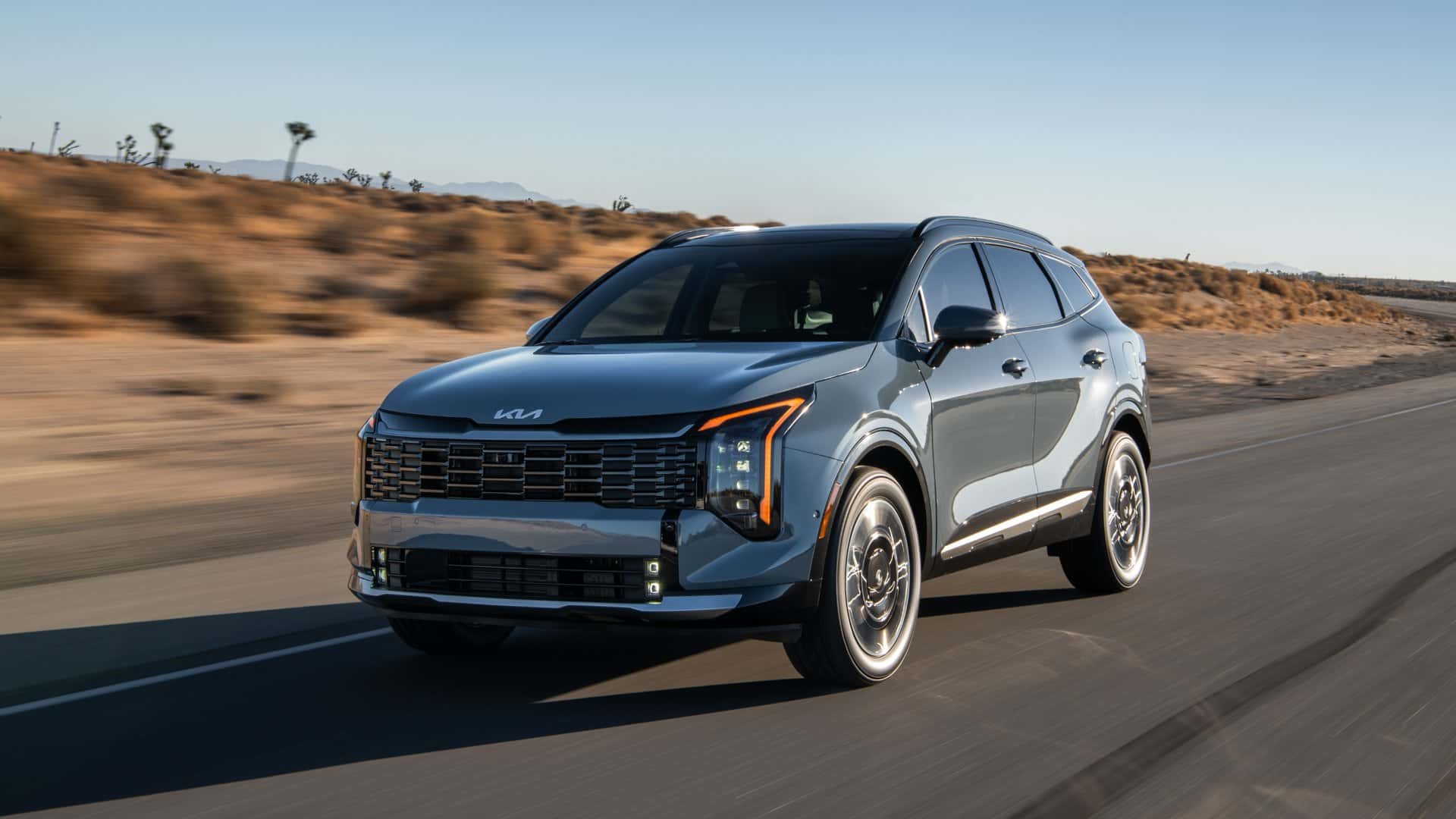
The 2026 Kia Sportage HEV is engineered as a compact hybrid utility vehicle that prioritizes mechanical efficiency, structural balance, and system integration. From a technical standpoint, this model combines a turbocharged gasoline engine with a transmission-mounted electric drive system, resulting in a unified hybrid architecture designed for consistent output and controlled energy management. Every major component, including the engine assembly, electric motors, battery system, drivetrain, suspension, and braking hardware, is configured to function cohesively rather than independently. This approach allows the 2026 Kia Sportage HEV to deliver predictable performance metrics, measured efficiency, and clearly defined capabilities across a wide range of driving conditions.
Hybrid Engine Design and Turbocharged Combustion System
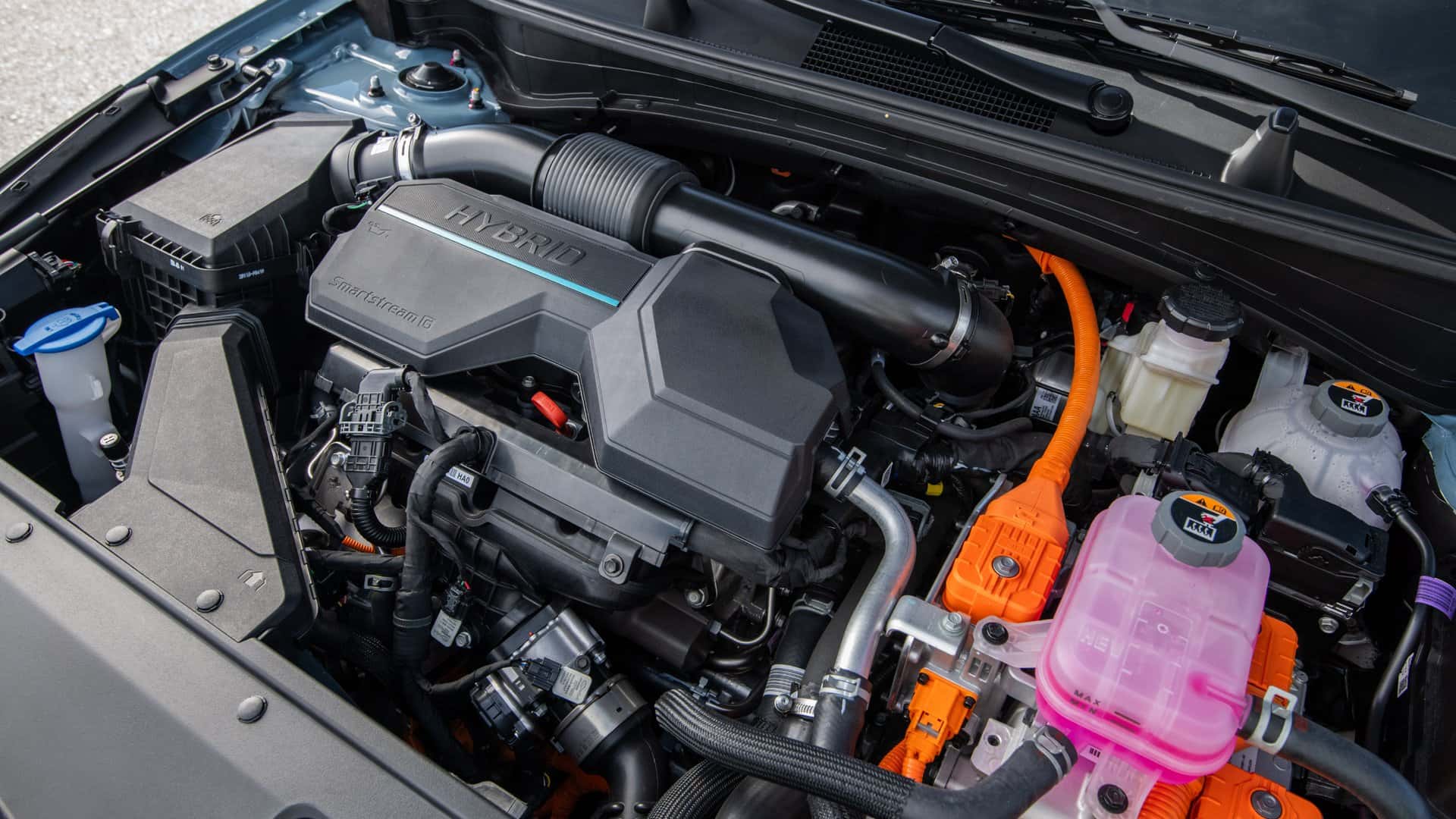
The gasoline component of the 2026 Kia Sportage HEV is a 1.6-liter turbocharged engine utilizing gasoline direct injection. This inline four-cylinder engine displaces 1,598 cubic centimeters and features an aluminum block paired with an aluminum cylinder head. Bore and stroke dimensions measure 75.6 millimeters by 89 millimeters, a configuration selected to balance low-end torque generation with sustained efficiency at higher engine speeds. A compression ratio of 10.5 to 1 supports controlled combustion while accommodating forced induction.
Maximum engine output is rated at 177 horsepower at 5,500 revolutions per minute. Peak torque output reaches 195 pound-feet and remains available from 1,500 through 4,500 revolutions per minute. This wide torque plateau allows the engine to maintain a stable response during acceleration, grade changes, and steady cruising. The valve system consists of a 16-valve dual overhead camshaft layout with continuously variable valve timing and hydraulic lash adjusters, ensuring consistent valve operation over extended service intervals. Fuel delivery relies on direct injection, and the engine is calibrated for regular unleaded fuel with a minimum octane requirement of 87.
Electric Drive Motor and Hybrid Starter Generator Configuration
Supporting the gasoline engine is a permanent magnet synchronous electric motor integrated directly into the transmission housing. This electric motor produces 64 horsepower between 1,800 and 2,100 revolutions per minute and delivers 195 pound-feet of torque from zero through 2,100 revolutions per minute. The availability of full torque at zero engine speed contributes to immediate vehicle response during launch and low-speed operation.
In addition to the primary drive motor, the hybrid system incorporates a dedicated hybrid starter generator, also utilizing a permanent magnet synchronous design. This unit produces 17.4 horsepower and 31.9 pound-feet of torque. Its function includes engine starting, energy recovery during deceleration, and supplemental power management during transitions between electric and gasoline operation. The combined operation of these electric components allows the hybrid system to modulate output smoothly while reducing reliance on the internal combustion engine during lower load conditions.
Combined Hybrid System Output and Transmission Calibration
When operating as an integrated system, the 2026 Kia Sportage HEV produces a total combined output of 232 horsepower and 271 pound-feet of torque. Power is managed through a six-speed automatic transmission engineered specifically for hybrid applications. The transmission features a transmission-mounted electric drive layout and employs a multi-plate wet friction engine clutch to manage engagement between power sources.
Gear ratios are selected to support both low-speed torque delivery and efficient highway cruising. First gear carries a ratio of 4.639 to 1, followed by second gear at 2.826 to 1 and third gear at 1.841 to 1. Fourth gear is set at 1.386 to 1, fifth gear operates at a direct 1.000 to 1 ratio, and sixth gear reduces engine speed with a ratio of 0.772 to 1. Reverse gear is configured at 3.385 to 1, while the final drive ratio is 3.320 to 1. Transmission lubricant capacity is rated at 6.0 liters, supporting thermal stability during extended operation.
High-Voltage Battery System and Electrical Specifications
Energy storage for the hybrid system is provided by a lithium-ion pouch-type battery pack. The battery operates at 270 volts and has a capacity of 5.5 amp-hours, resulting in total energy storage of 1.49 kilowatt-hours. Maximum power output from the battery system is rated at 64.0 kilowatts. The battery assembly weighs 37.5 kilograms, or approximately 82.7 pounds, allowing it to be integrated without significantly affecting vehicle weight distribution.
The battery system is designed to support frequent charge and discharge cycles associated with regenerative braking and electric propulsion. Electrical consistency is maintained through coordinated control of the battery, electric motor, and hybrid starter generator. Fuel tank capacity for the vehicle is rated at 13.7 gallons, ensuring sufficient driving range when operating under hybrid conditions.
Exterior Dimensions and Ground Clearance Engineering
The 2026 Kia Sportage HEV is built on a platform with a wheelbase measuring 108.5 inches. Overall length is measured at 184.4 inches, with a width of 73.4 inches. Vehicle height varies depending on configuration, ranging from 65.4 inches without roof rails to 66.3 inches with roof rails installed. These dimensions contribute to stable handling characteristics while maintaining a compact footprint suitable for urban and suburban environments.
Front track width measures approximately 63.6 to 63.8 inches, while rear track width ranges from 63.9 to 64.1 inches. Front overhang is measured at 35.6 inches, and the rear overhang extends to 39.4 inches. Minimum ground clearance ranges from 7.1 inches on lower configurations to 8.3 inches on models with increased ride height. Approach angles reach up to 18.9 degrees, departure angles extend to 26.9 degrees, and breakover angles reach 19.3 degrees, supporting controlled operation over uneven surfaces.
Interior Space Allocation and Cargo Capacity
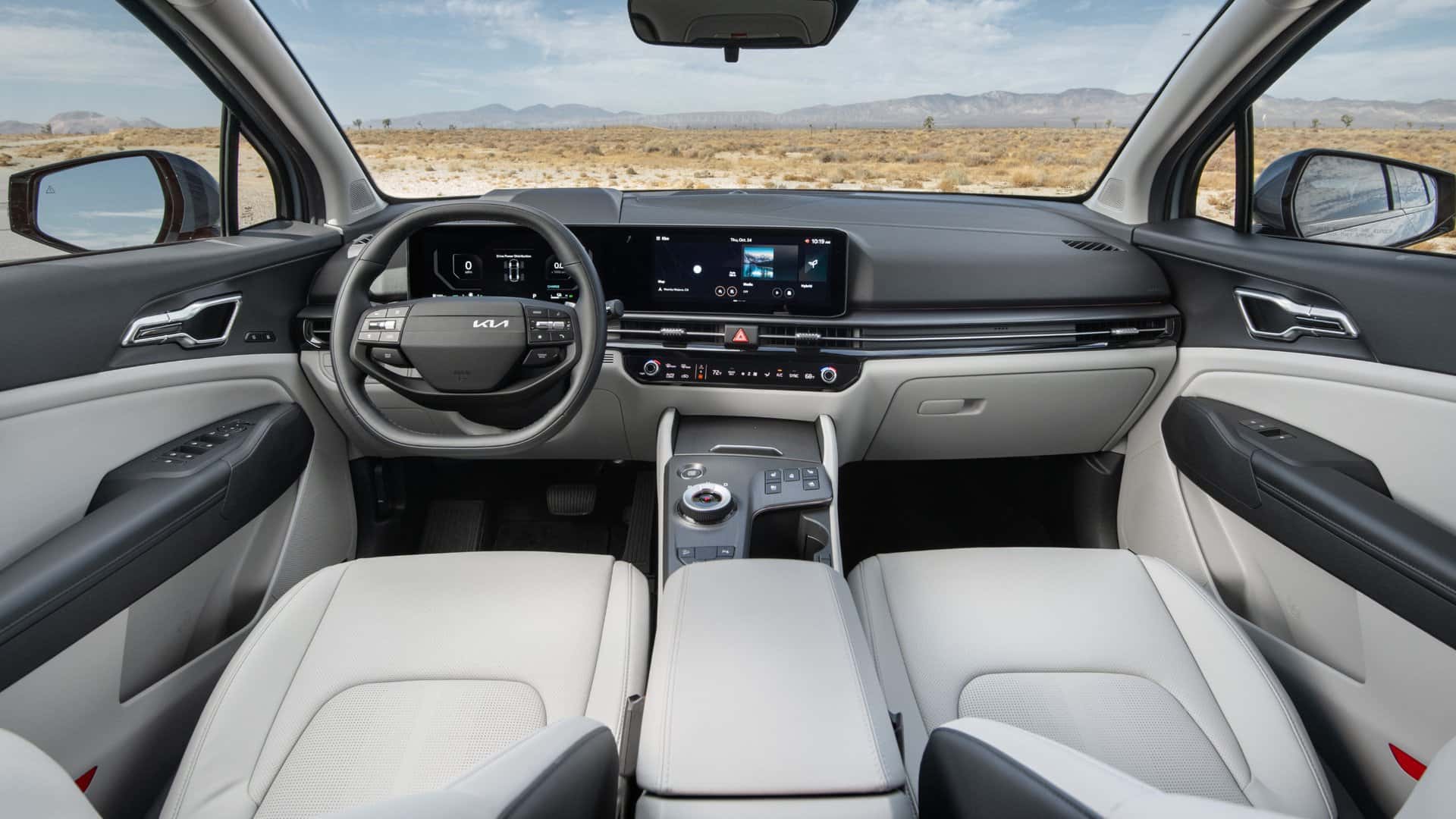
Interior dimensions of the 2026 Kia Sportage HEV are engineered to provide balanced passenger accommodation and cargo flexibility. Front headroom measures 39.6 inches on models without a sunroof and 37.8 inches on models equipped with a sunroof. Rear headroom follows the same measurements depending on configuration. Front legroom is rated at 41.4 inches, while rear legroom measures 41.3 inches, providing nearly equal space for both seating rows.
Front shoulder room is measured at 57.5 inches, with rear shoulder room at 55.6 inches. Hip room measures 54.8 inches in the front and 53.4 inches in the rear. Cargo capacity is enhanced by a dual-level cargo floor system. With the second row in place, cargo volume measures 34.5 cubic feet in the high floor position and 39.5 cubic feet in the low floor position. With the rear seats folded, cargo capacity expands to 65.4 cubic feet in the high floor position and 73.7 cubic feet in the low floor position.
Suspension Layout and Steering Precision
The chassis of the 2026 Kia Sportage HEV utilizes a MacPherson® strut front suspension paired with a multi-link rear suspension. Gas-charged shock absorbers are installed at all four corners, supporting controlled damping over varied road surfaces. This suspension configuration balances ride comfort with predictable handling response during cornering and lane transitions.
Steering is provided by a column-type motor-driven power steering system. The steering ratio is set at 13.7 to 1, and the system requires 2.41 turns lock-to-lock. Turning radius is measured at 19.3 feet, contributing to maneuverability in confined driving environments such as parking structures and residential areas.
Braking System, Wheels, and Load Ratings
The braking system incorporates an electronic parking brake with auto-hold functionality. Brake booster ratio is rated at 9.1 to 1, supporting consistent pedal feel and braking response. Wheel sizes vary by configuration, ranging from 17-inch alloy wheels with 235 by 65 R17 tires to 19-inch alloy wheels fitted with 235 by 55 R19 tires. A tire mending kit is standard on certain trims, while a compact spare tire is available on others.
Curb weight for the 2026 Kia Sportage HEV ranges from 3,598 pounds to 3,994 pounds depending on configuration. Gross vehicle weight rating reaches up to 5,092 pounds. Towing capacity is rated at 2,000 pounds when equipped with trailer brakes and 1,653 pounds without trailer brakes. Maximum permissible static vertical load on the coupling device is rated at 220 pounds.
Integrated Efficiency and Driving Capability
Estimated fuel economy figures reflect the hybrid system’s operational efficiency. City fuel economy reaches up to 41 miles per gallon on select configurations, while highway ratings extend up to 44 miles per gallon. Combined fuel economy ratings reach up to 42 miles per gallon. These figures demonstrate the system’s ability to balance electric assistance with turbocharged engine output during varied driving conditions.
Disclaimer: MPG: Based on EPA estimates. Actual mileage will vary with options, driving conditions, driving habits, and your vehicle’s condition. For more information, please see www.fueleconomy.gov.
Schedule a Test Ride Today
Drivers interested in evaluating how the hybrid powertrain, electric torque delivery, and chassis tuning work together can benefit from experiencing the vehicle in person. A test drive allows for direct assessment of acceleration behavior, steering response, braking consistency, and overall system coordination. At Courage Kia near Columbia, SC, our team can provide detailed explanations of the vehicle’s technical features while allowing customers to observe how these specifications translate to on-road operation. Scheduling a drive offers the opportunity to explore the balance between efficiency and performance in controlled driving conditions. This hands-on experience helps clarify how the engineering of the 2026 Kia Sportage HEV supports everyday use across different driving environments.

